New Ideation
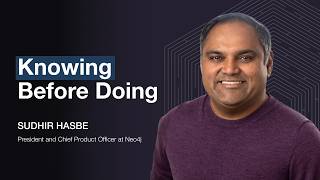
New this week · S7E13 · Sudhir Hasbe
Ideation
Knowing Before Doing
The industry is sprinting toward autonomous action while skipping the onboarding step every human gets: learn what matters before anyone hands you the scalpel. Sudhir Hasbe argues graph databases are the knowledge layer—relationships over rows, feature reduction over million-token dumps, shared semantic maps over siloed agent memory.
Originating episode · Knowing Before Doing · Invisible Machines · Sudhir Hasbe · S7E13 · June 2026
Before you start doing, start knowing.
—Robb Wilson on organizational AGI · Invisible Machines · S7E13
Episode
Free
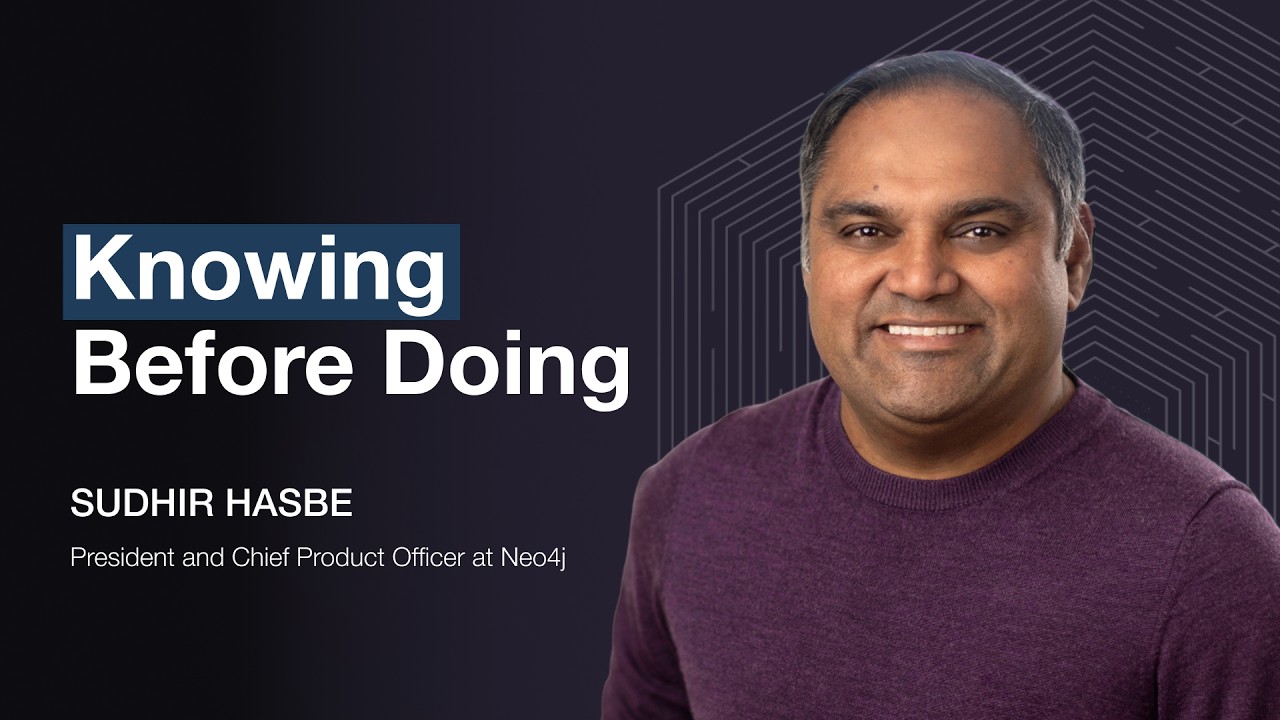
Sudhir Hasbe · President & CPO, Neo4j
Knowing Before Doing · Invisible Machines
Members Essay
🔒 · 8 min
Josh Tyson · Original analysis
How Do You Like Them Apples?
Good Will Hunting, canonically correct knowledge, and why LLMs regurgitate books but cannot tell you what your Sistine Chapel smells like.
Read essay →
UXM Article
Free · 10 min
UX Magazine Staff
The Graph Is Your Cortex
Companion essay on relationship-native knowledge, feature reduction, and why graphs are the reasoning substrate for agentic systems.
Read article →
Archive summary
Free · 8 min
Dr. Jim Webber · S2E4
Graph Databases Give LLMs Context
Neo4j’s chief scientist on graphs as LLM underlay—the through-line that lands in Sudhir’s S7E13 conversation.
Read summary →
Archive summary
Free · 9 min
Roger Forsgren · S3E14 · guest host Mike Lee
Lean Knowledge Management at NASA
Critical knowledge for specific audiences, return on mission success, and why the ROI of KM is the absence of disasters.
Read summary →