The Design
Intelligence Review
Sign in Join free
The Agentic Design Stack
UX is the future of AI
1.2M+
People in the UXM Community
112+
Invisible Machines episodes
20+
Years publishing UX thinking
Season 7—Spring 2026  ·  17 episodes  ·  Through-line: the human architecture of institutional change
New Ideation

New Articles

All articles →
Organizational design

15 Rules of Design Leadership for 2026

Enterprise failures repeat. Pavel Bukengolts on 15 durable rules, and why leaders should pick two and build the smallest system that makes them a habit.

Pavel Bukengolts  ·  8 min
Service design

Anyone Can Build Fast: Speed Is No Longer Your Advantage. Value Realization Is. Here Is Why

AI made building fast easy. Anina Botha on why product-market fit is not value realization, and why generic products do not stick.

Anina Botha  ·  3 min
Service design

The Minimum Viable Product Nobody Tells You About

A real MVP isn’t just small: it has to teach you something true about your users. Päivi Salminen on finding the core and starting with one.

Paivi Salminen  ·  3 min
UX × AI Series
Part 10 · Organizational design

Who Owns the Design When AI Made Half of It?

Tushar Deshmukh closes the UX × AI series on authorship, copyright, and what ownership means when a design is half human judgment and half machine generation.

Tushar Deshmukh  ·  17 min
Service design

You Don’t Have to Ship It to Everyone

The quiet freedom of designing for some, not all. Agile doesn’t mean releasing everything at once—good teams roll out in layers.

Paivi Salminen  ·  3 min
Interaction design

UX is Design: Welcome Ally

Accessibility isn’t a feature for a niche. Ally is the default persona of human reality—and the foundation of AI-adaptive interfaces.

Krystian M. Frahn  ·  10 min
Conversation design

Your Users Know It’s a Machine. They’re Bonding With It Anyway.

A Communications Psychology study finds people bond with AI that mirrors them—even when told nobody is home. Disclosure is not the guardrail.

UX Magazine Staff  ·  7 min
Organizational design

Token Maxing Is a Lazy Metric

Don Scheibenreif on token maxing as a lazy metric—bottom-up adoption, top-down denial, and the difference between burning tokens and reinventing work.

UX Magazine Staff  ·  5 min
Ideations—Season 7 All ideations →
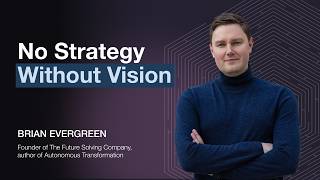
Future-Solving
Naming the human-feeling outcome before the tool parade begins: map what must become true, let exploration stay fuzzy while the vision stays sharp, and refuse to substitute vendor matrices for strategy.
Canonical Knowledge
One governed layer of meaning everyone agrees to treat as source-of-truth—so agents and humans aren’t improvising incompatible copies of the same policy, pricing rule, or clinical pathway.
Cheap Prediction, Expensive Judgment
When prediction drops toward zero marginal cost, the binding constraint stops being “can the model guess right?” and becomes “who is accountable for acting on it inside messy institutions?”
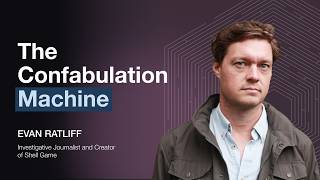
The Confabulation Machine
LLMs as conviction engines: fluent, plausible, and prone to completing narratives that never happened—a design problem for verification layers, not just model knobs.
Latest Episode Episode page →
Read now  ·  Invisible Machines S7E17
What Agentic Orchestration Actually Means—Josh Tyson & Robb Wilson · Invisible Machines S7E17
Josh Tyson & Robb Wilson on agentic orchestration
Josh Tyson & Robb Wilson  ·  Hosts, Invisible Machines
The demo works until you have to explain yesterday’s decision. Why mission-critical agentic orchestration only sounds like an oxymoron—and why you cannot trust the orchestratee to be the orchestrator.
Members Essays Member essays →
Members only  ·  Josh Tyson
Usurper, My Collaborator

On feeding a finished novel to Claude, and why collaborating with the usurper is easier than standing watch.

Original analysis  ·  Tied to Selling to Machines
Selling to Machines Collaboration Writing Claude
Read members essay →